
Gold Leaps $100 on US Treasury Bond Buybacks News
SILVER ROSE and GOLD LEAPT on Wednesday after the US Treasury said it's doubling the size of buybacks for America's longer-term government debt, driving bond prices higher and cutting yields from this week's fresh multi-decade highs.
Having peaked Monday at 5.31%, Washington's highest borrowing cost since 2007, the yield on 30-year US Treasury bonds sank almost 0.1 percentage points on the news, down to the lowest in 2 weeks at 5.19% per annum.
Gold bullion jumped $100 inside 45 minutes, hitting its highest since the first week of June above $4460 per troy ounce.
Silver prices reversed all of this week's previous $2 drop to trade back above $65 per troy ounce, and the US stock market also gained, snapping 3 days of losses and shrugging off a fresh plunge in Asian tech stocks overnight.
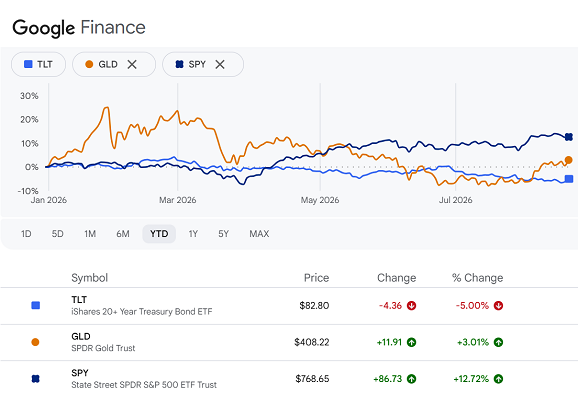
That put State Street's SPDR S&P500 ETF (NYSEArca: SPY) up 0.4% at New York's opening, while the TLT ETF of long-dated US Treasury debt gained 1.4% and the giant GLD gold ETF added 3.2% from last night's close.
The Department of the Treasury said it will from 9 September double to $4 billion or more "the size of liquidity support buyback operations" for 10-year through 30-year T-bonds.
"This increase in buyback operation sizes reflects Treasury’s desire to provide greater liquidity support," the announcement said.
Coming after the jump in 30-year yields was increasingly seen hurting the US housing market as well as consumer staples stock prices, the news is "what caused the rally" in stocks and bonds, said pseudonymous bond trader Ed Bradford on X.
"Oil prices fell, which makes no sense," notes Weiss Ratings editor Sean Brodrick.
"But I guess the money to buy gold and stocks had to come from somewhere."
Looking at shorter-term US interest rates, "Inflation and housing figures imply rates on hold," says precious metals specialist Rhona O'Connell at brokerage StoneX, also noting how July's month-on-month fall in US retail sales "contrasts with year-on-year strength."
As a result of the mixed data, "Fed bifurcation is widening," O'Connell says, with speeches from 3 officials last week speaking for a raise, a hold and a cut respectively.
Similarly threatening to "cancel each other out...conflicting forces arise from post-tariff and tax refund activity," says StoneX's head of market analysis, pointing to the end of the 2026 tax filing season − in which the IRS has sent $296bn back to taxpayers, almost 1/5th more than in 2025 − while tariff refunds are meantime "working their way through to [US] manufacturers," potentially enabling them to limit further price increases.
Yesterday's US data releases put the number of new building permits issued ahead of analyst forecasts for July. But pending US home sales fell from June, defying consensus predictions.
So too did US import and export prices, while housing starts dropped harder than expected and industrial production growth slowed.
President Trump overnight paused for 3 days the 50% import tariff due to hit $20 billion per year of goods from Canada, tweeting that a "deal" is close and hinting that the Keystone XL oil pipeline project − halted in 2021 after US landowners, Native tribes and green campaigners lobbied the Biden administration − may return "from the grave".










 Email us