
Where Is Britain's Buried Treasure? The UK's Top Treasure Hotspots Revealed
Bank of England Vaults hold the most "buried" gold in the UK, but where else has treasure been found?
BRITAIN'S SOIL holds one of the richest archaeological records in the world, from Iron Age gold and Roman coin hoards to Anglo-Saxon silver.
Every year from 2014 to 2023, more than 1,000 Treasure finds were reported in England, Wales and Northern Ireland, according to government statistics. In 2022, 94% of them were found by metal detectorists.
But where in Britain should you look? Looking only at where the most treasure has already been found gives an incomplete picture. So to mark International Archaeology Day on 17 October, BullionVault has compared 85 counties and historic areas of England, Scotland and Wales on two measures:
- Treasure finds* per 100 km², showing where discoveries have been most concentrated
- Scheduled monuments** per 100 km², showing where the landscape holds the most evidence of historic human activity or settlements
Each area is ranked on both measures, and the two rankings are combined to give an overall Treasure Hotspot ranking.
The Isle of Wight comes out on top, ahead of Dorset and Wiltshire.

Explore the map: hover over or tap any county to see its Treasure finds and scheduled monuments per 100 km².
Top 10 Treasure hotspots in Britain
Britain's top 10 Treasure hotspots
Click a column heading to sort.
*Gold Treasure finds (England and Wales); coin finds (Scotland). **Scheduled monuments.
1. Isle of Wight: Britain's number one Treasure hotspot. The island's 451 Treasure finds work out at 118.7 per 100 km², almost 12 times the British average and more than two and a half times the next-highest area, Staffordshire. With 32.1 scheduled monuments per 100 km², it also ranks 8th for historic activity.
2. Dorset and the Isle of Wight are the only two areas to make the top 10 on both measures. Dorset ranks 9th for Treasure finds and 4th for scheduled monuments, which include the Iron Age hillfort of Maiden Castle.
3. Wiltshire: Home to Stonehenge and Avebury, Wiltshire has 1,360 scheduled monuments, or 39 per 100 km², the third-highest density in Britain. It adds 758 Treasure finds.
4. Midlothian: Scotland's leading hotspot packs 119 recorded coin finds into just 354 km². That's 33.6 per 100 km², the fifth-highest find density in Britain.
5. South Glamorgan: Wales's top-ranked area by a wide margin, with 17 Treasure finds and 29.2 scheduled monuments for every 100 km². The next-best Welsh area, Gwent, ranks 33rd.
6. Hampshire: A proven finds county. Hampshire's 30.3 Treasure finds per 100 km² rank 6th in Britain, from 1,142 finds in total.
7. North Yorkshire has more scheduled monuments than anywhere else in Britain, 1,853 in total, and 1,273 Treasure finds, the fourth-highest number.
8. East Lothian has the second-highest density of scheduled monuments in Britain, at 42.4 per 100 km². But just 50 coin finds have been recorded there.
9. Cornwall: Nowhere in Britain has more scheduled monuments for its size: 44.6 per 100 km². Yet Cornwall ranks only 40th for Treasure finds, at 6.1 per 100 km².
10. West Sussex rounds out the top 10 with a balance of both measures: 15.1 Treasure finds and 18.2 scheduled monuments per 100 km².
Why the most treasure doesn't mean the top spot
Several of Britain's best-known Treasure counties rank well outside the top 10. They have plenty of finds, but comparatively few scheduled monuments.
Britain's biggest Treasure counties
Norfolk has recorded more Treasure than anywhere else in Britain: 2,044 finds, or 9% of the national total. It also topped the government's county tables for new Treasure reports in both 2022 and 2023. But with 8.1 scheduled monuments per 100 km², it ranks 29th.
East of England stands out. Norfolk, Suffolk and Essex together account for 4,390 Treasure finds, almost one in five of all those recorded in Britain, on less than 6% of its land.
Staffordshire, home of the Anglo-Saxon Staffordshire Hoard, has the second-highest concentration of finds in Britain at 43.8 per 100 km², but ranks 15th overall.
Of the eight areas with more than 1,000 Treasure finds, only Hampshire and North Yorkshire make the top 10.
Britain's hidden Treasure hotspots
Some areas have an exceptionally strong historical footprint but comparatively little treasure recorded so far. They could be some of Britain's most overlooked Treasure hotspots.
Rich in history, light on finds
Devon has 1,787 scheduled monuments, the second-highest total in Britain after North Yorkshire. But with just 4.2 Treasure finds per 100 km², it ranks 21st overall.
Orkney has the fifth-highest density of scheduled monuments in Britain, including the prehistoric village of Skara Brae. Yet only 10 coin finds have been recorded across the islands.
In Dumfries and Wigtown in south-west Scotland, and in Tweeddale in the Borders, monument densities rank among the ten highest in Britain, while their find densities rank between 49th and 60th.
In Wales, West Glamorgan has the 13th-highest monument density in Britain, but just six recorded Treasure finds.
Scottish figures count coin finds only, so low numbers there partly reflect the narrower measure.
England, Scotland and Wales compared
England, Scotland and Wales compared
*Gold Treasure finds (England and Wales); coin finds (Scotland). **Scheduled monuments.
England accounts for 92% of all recorded finds and 16 of Britain's top 20 hotspots. But Wales has the densest concentration of scheduled monuments of the three nations, at 18.7 per 100 km².
Scotland has two areas in the top 10, Midlothian and East Lothian, but seven of the bottom 10. Ross and Cromarty ranks last, with 0.4 coin finds and 2.1 scheduled monuments per 100 km².
How the Treasure Hotspot ranking works
Every area is ranked twice:
- By Treasure finds per 100 km², from highest (1st) to lowest (85th)
- By scheduled monuments per 100 km², from highest (1st) to lowest (85th)
The two rankings are added together, and the areas with the lowest combined total rank highest overall. Where two areas tie, the one with more Treasure finds in total ranks higher.
This gives equal weight to proven discoveries and to evidence of historic activity. It also means an area can't reach the top on finds alone: it needs a strong historical footprint too.
*Treasure finds: for England and Wales, gold Treasure finds recorded by the British Museum. Scotland has no equivalent to the Treasure Act, so recorded coin finds are used as the closest comparable measure. Scottish figures are therefore not directly comparable with England and Wales.
**Scheduled monuments are used as the common measure of places of archaeological significance across all three nations of Britain. In England, a scheduled monument is a nationally important archaeological site or monument included in the statutory Schedule of Monuments, with scheduling decisions made by the Secretary of State on the advice of Historic England. In Scotland, it is a Protected Historic Place designated by Historic Environment Scotland as a nationally important archaeological site or monument. In Wales, it is a monument of national importance included in the statutory Schedule maintained by the Welsh Ministers under the Historic Environment (Wales) Act 2023, with Cadw advising on and administering scheduling.
Where finds or monuments were reported at local authority level, they have been combined to county level.
This analysis compares broad geographic areas. It does not predict that Treasure is present at any particular location, and should not be used as a guide to individual sites. Always get the landowner's permission before metal detecting. Metal detecting on a scheduled monument without consent is a criminal offence.
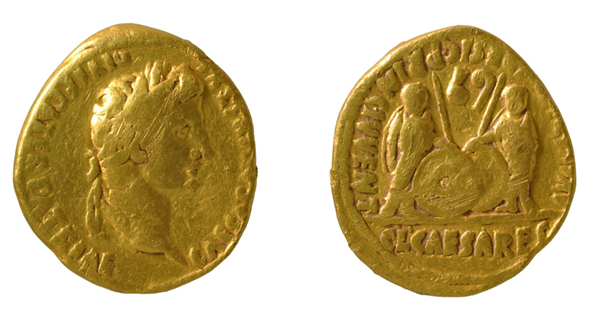
Image credit (British Museum)
Sources
Treasure Hotspot rankings were calculated by BullionVault using the following data, accessed September 2026:
- Scheduled monuments, England: Historic England, Scheduled Monuments dataset. © Historic England 2026. Contains Ordnance Survey data © Crown copyright and database right 2026.
- Scheduled monuments, Wales: Cadw, Scheduled Monuments, via DataMapWales. Contains Cadw data © Crown copyright 2026.
- Scheduled monuments, Scotland: Historic Environment Scotland, Scheduled Monuments dataset. © Historic Environment Scotland. County-level breakdowns from Ancient Monuments where needed.
- Coin finds, Scotland: Historic Environment Scotland, data downloads and trove.scot.
- Treasure finds, England and Wales: British Museum, Treasure and Portable Antiquities Scheme.
- Annual Treasure statistics: Department for Culture, Media and Sport, Reported Treasure finds 2022 and 2023.
- Land area: Wikipedia, county articles.
Treasure hunting FAQs:
In England, Wales and Northern Ireland, the Treasure Act 1996 defines Treasure as, among other things, coins and objects at least 300 years old containing at least 10% gold or silver, and prehistoric hoards of base metal. Since 2023, the definition also covers some metal objects at least 200 years old that are of outstanding historical significance.
You must report a possible Treasure find to the local coroner within 14 days of realising it could be Treasure. Most finders do this through their local Finds Liaison Officer at the Portable Antiquities Scheme.
If a museum wants to acquire the find, it pays a reward based on its market value, set by the independent Treasure Valuation Committee. The reward is usually shared between the finder and the landowner.
Yes. Under Scots law, all archaeological finds belong to the Crown, not just gold and silver, and must be reported to the Treasure Trove Unit. That is one reason Scottish areas' find figures are not strictly like-for-like with England and Wales.
Gold does not rust, tarnish or corrode, so a gold coin can come out of the ground looking almost as it did when it was buried centuries ago. Its durability and scarcity are why people have hoarded it for thousands of years, and why it is still held as a store of value today.
Yes. With BullionVault you can buy physical gold bullion at live market prices, stored in professional vaults in London, Zurich, New York, Toronto or Singapore.