
Gold, Silver Up Again as US Fed Starts 'No QE QE', Europe 'Must Prepare for War'
GOLD PRICES rose for a 3rd day running in London on Thursday as silver set its 4th new daily record in a row and Western stock markets struggled after the US Fed cut interest rates − and began "stealth QE" with fresh purchases of US government debt − while the head of NATO urged European leaders to prepare for war with Russia.
Almost 4 years into the Kremlin's invasion of Ukraine, "We are Russia's next target, and we are already in harm's way," said NATO chief Mark Rutte in Berlin today.
"We must be prepared for the scale of war our grandparents and great grandparents endured."
Gold fixed around $4228 per Troy ounce at London's 3pm auction before rallying further to trade unchanged for the week so far above $4240 in spot-market dealing.
Silver meantime shot within 5 cents of $63 per Troy ounce, more than 115% higher for 2025 to date, after setting a new record auction price above $62 at midday.
"Fed starts stealth easing," says CNBC's recap of yesterday's US central bank decisions, which saw the Federal Reserve cut its short-term interest rate 0.25 points to the lowest in 3 years around 3.6% while announcing that it "will initiate purchases of shorter-term Treasury securities...to maintain an ample supply of reserves."
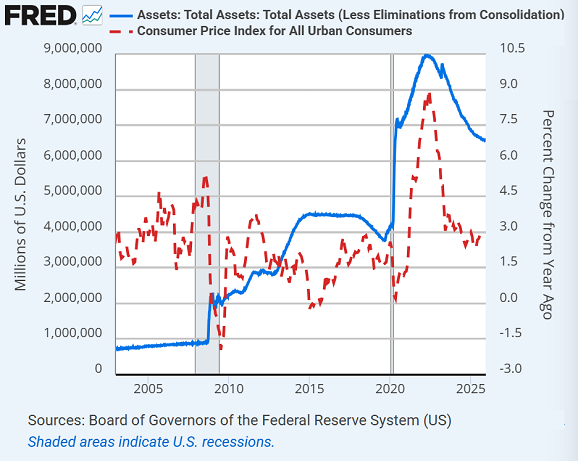
"So QE (or 'Not-QE, QE') is back," says one asset manager, referring to the short-term debt purchases − due to start with an offer of $40 billion to market participants this Friday − as quantitative easing like the Fed began in 2009 along with most other Western central banks.
"The Fed's 'Reserve Management Purchases' are not QE," counters blogger Wolf Richter, saying that the US central bank's statement means that its policy "reverts to pre-2009 balance sheet management, where the balance sheet grows with or less than the economy."
"They didn't want it to be QE so they focused on bills for purchases," says specialist advisor Andy Constans.
"[But] it was clearly dovish [because] the Fed think they went too far [with quantitative tightening and] drained reserves via run-off way too much."
Shares in European defense stocks edged back Thursday, trimming their 2025 gain to 51.5% in Euro terms but tripling on the Stoxx Europe Total Market Aerospace & Defense index since Russia began its all-out invasion of Ukraine 4 years ago next February.
The MSCI World Index of rich-world equities meantime tried but failed for the 7th time to breach end-October's all-time high.
"Most European nations, they're decaying," said US President Donald Trump in an interview on Tuesday, repeating the attack he made at the United Nations this spring on the region's immigration and 'woke' policies.
With the White House's latest National Security Strategy and Ukraine 'peace plan' proposals widely seen as favouring Moscow, "I think [Russia's President Putin] would like to see a weak Europe and so, you know, to be honest with you, he's getting that," Trump went on.
"It has nothing to do with us."
"Moscow will pursue its goals in Ukraine regardless of predictions for the end of the conflict," said Russian news agency Tass on Thursday, quoting Foreign Minister Sergey Lavrov claiming that the European Union has been defeated in its "anti-Russian blitzkrieg".
Looking ahead, the US Fed's policy committee repeated its median forecast for US interest rates of 3.1% for 2026 and 2027 in Wednesday's 'dot plot' projections, albeit with one dovish member − most likely Trump appointee and White House advisor Stephen Miran − cutting their target for December next year from 2.6% to 2.1%.
Unanimous on holding rates unchanged at each meeting until June, the Fed was split three ways again yesterday, with Miran calling for a half-point cut, 2 other members urging no change, and the other 9 deciding the quarter-point cut.
Telling reporters at Wednesday's post-decision press conference that he wants to leave the Fed next May with the US economy in good shape, "It's really tariffs that are causing the most of the inflation overshoot," said current Fed chair Jerome Powell, repeatedly attacked by President Trump for not slashing the cost of borrowing.
"The effects...will be relatively short lived," Powell went on, "effectively a one time shift. Our obligation [at the Fed] is to make sure that does not become an ongoing inflation problem."









 Email us